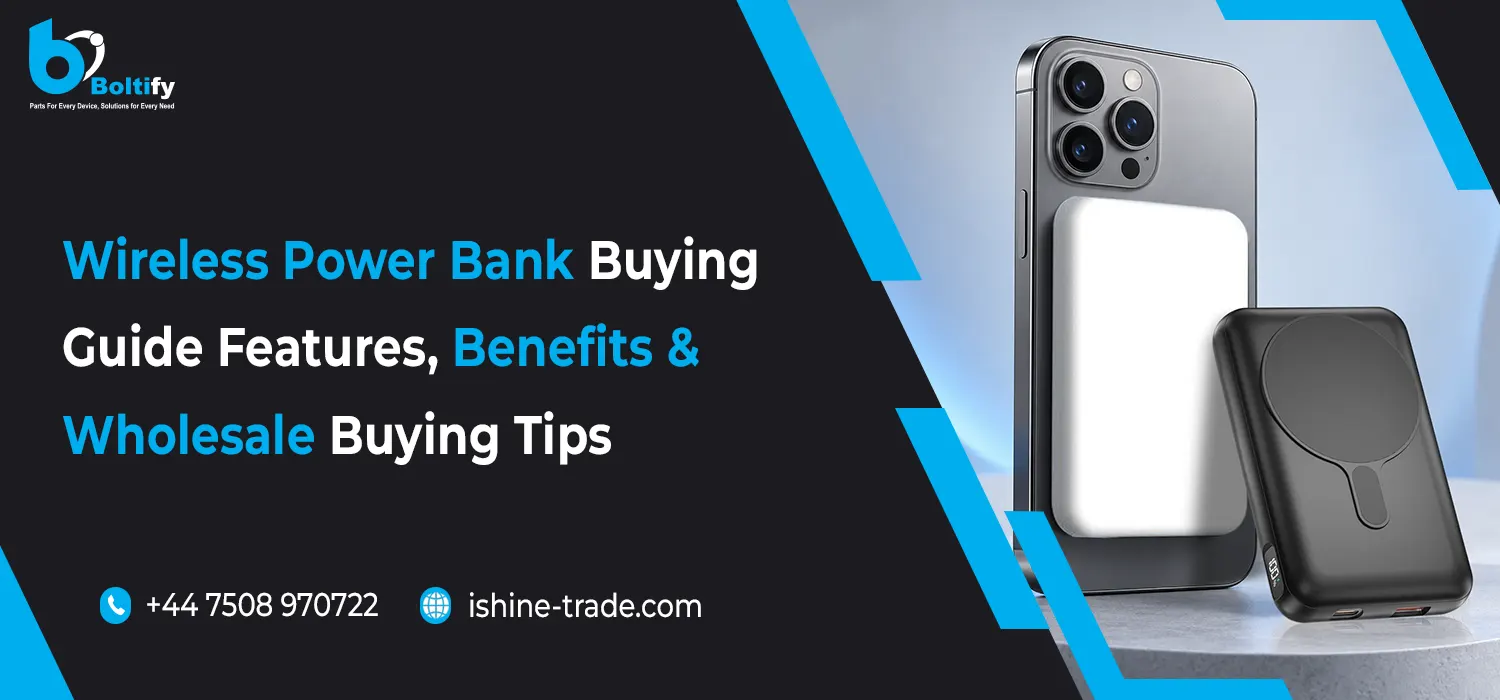
A wireless power bank makes it easier to recharge a compatible phone without plugging a charging cable into the handset. Whether you need a quick battery top-up during your commute or a portable charging option for a busy working day, the right model combines convenience with useful battery capacity.
For retailers, choosing stock takes more than comparing prices and packaging. Phone compatibility, wireless output, USB-C features and clear product information all affect how easily a power bank can be sold and how well it meets customer expectations.
This guide explains how wireless power banks work, which features matter and what businesses should check before placing a wholesale order.
What Is a Wireless Power Bank?
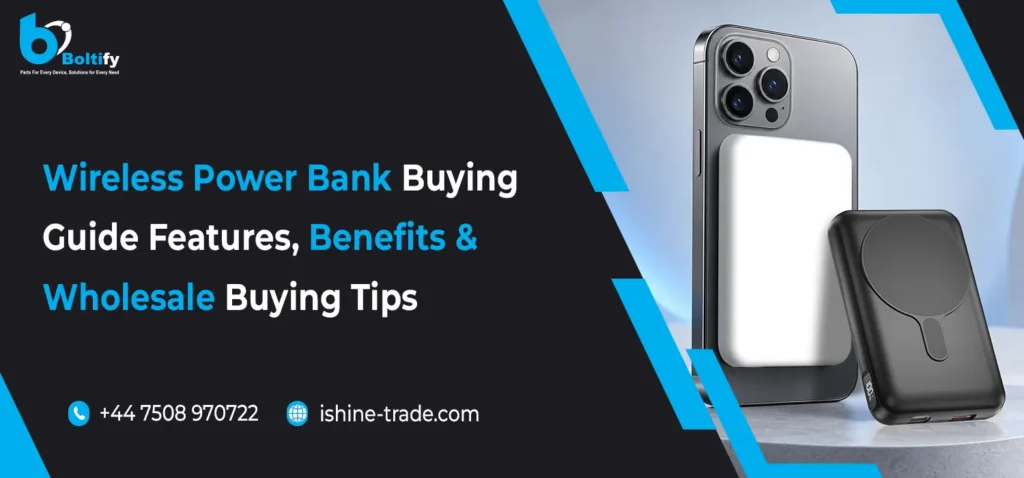
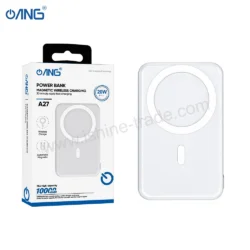
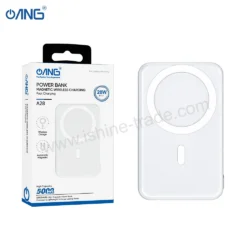
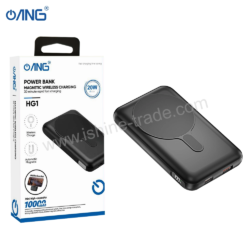
A wireless power bank is a portable battery pack that transfers power to a compatible device through wireless charging coils. Instead of connecting a cable to your phone, you place the handset against the power bank’s charging surface.
The phone must support a compatible wireless charging standard. A magnetic ring or magnetic phone case alone does not give a phone wireless charging capability.
Many wireless models also include USB charging ports. This allows users to choose between wireless charging for convenience and cable charging when they need a different connection or charging speed.
The power bank itself still needs to be recharged, usually through a USB input.
How Does a Wireless Power Bank Work?
Wireless charging uses electromagnetic induction to transfer energy between a coil inside the power bank and a receiving coil inside the phone.
Position matters. If the coils are poorly aligned, charging may become slower, intermittent or stop altogether. Magnetic models help hold compatible devices in the correct position, making them easier to use while carrying the phone.
However, magnetic attachment and charging compatibility are separate features. Always check the supported phone models, charging standard and case requirements before buying.
Features to Look for in a Wireless Power Bank
Phone Compatibility and Charging Standards
Start with your phone’s specifications rather than the power bank’s appearance.
Check whether the handset supports wireless charging and whether the power bank supports the appropriate charging standard. For magnetic models, confirm that the phone or its compatible case provides the attachment needed.
Qi and Qi2 are terms buyers will see when comparing wireless chargers. Qi2 includes magnetic alignment technology, but a product described simply as “magnetic” should not automatically be treated as Qi2 certified.
For retailers, accurate compatibility information helps customers choose suitable accessories and reduces avoidable returns.
Battery Capacity
Battery capacity is commonly expressed in milliamp-hours, or mAh. A larger capacity generally stores more energy, although it often adds weight and bulk.
| Capacity | Typical buying consideration | Main trade-off |
|---|---|---|
| 5,000mAh | Compact backup for occasional top-ups | Less stored energy |
| 10,000mAh | A balance between portability and battery reserve | More weight than smaller models |
| 20,000mAh | Extra reserve for extended use, where available | Larger size and longer recharge time |
The advertised capacity does not transfer directly into the same amount of phone battery capacity. Energy is lost during voltage conversion and charging, including wireless transfer.
Avoid choosing a model based on a promised number of full charges alone. Results depend on the phone’s battery, charging method, temperature and whether the handset is being used.
Wireless Output and Wired Charging Speed
Read the wireless and wired output specifications separately.
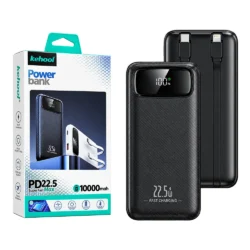
A power bank advertised with a headline wattage may deliver that output through a USB port rather than its wireless charging surface. For example, a stated 20W USB-C output does not automatically mean 20W wireless charging.
Actual charging speed also depends on what the phone supports. A higher-rated power bank cannot force a handset to accept more power than its charging system allows.
Retail product descriptions should clearly identify:
- Maximum wireless output.
- Maximum USB-C or USB-A output.
- Supported fast charging protocols.
- Input power used to recharge the power bank.
- Any output limits when charging multiple devices.
USB-C Input and Output
USB-C can make a wireless power bank more versatile, but the connector alone does not tell you what it supports.
Some USB-C ports are input-only, while others support both input and output. USB Power Delivery support should also be checked separately.
A model with suitable wired output gives customers an alternative when wireless charging is inconvenient or when another device needs a cable connection.
Size, Weight and Magnetic Fit
A compact power bank is easier to carry, particularly when attached to the back of a phone.
Check its dimensions against the handset. A bulky model may sit too close to the camera area, affect grip or make the phone uncomfortable to hold.
Case compatibility also matters. Thick cases, metal accessories and unsuitable magnetic arrangements can interfere with attachment or charging. Follow the manufacturer’s guidance rather than assuming every case will work.
Protection Features and Product Documentation
Look for clearly documented protection features, such as temperature monitoring, overcurrent protection and short-circuit protection.
Businesses should also request understandable instructions, model identification and relevant product documentation. Where certification is claimed, verify that it applies to the exact model being purchased.
Clear information gives retailers a stronger basis for answering customer questions than vague claims such as “universal compatibility” or “super-fast charging”.
Benefits of Using a Wireless Power Bank
Convenient Phone Charging
Wireless charging removes the need to connect a cable to the phone for each top-up. This can be useful when moving between meetings, commuting or spending time away from a wall socket.
Fewer Loose Cables During Use
A magnetic wireless model can keep the phone and battery pack together as one portable setup. Users still need a way to recharge the power bank, but they may not need a separate phone charging cable during wireless use.
Flexible Charging Options
Models with both wireless charging and USB output offer more ways to charge compatible devices. A user can choose the connection that suits the phone, available cable and charging requirements.
An Additional Retail Choice
Wireless models give mobile accessory shops an option alongside conventional power banks. Retailers can explain the difference between compact magnetic chargers, larger battery packs and wired fast charging models instead of presenting every product as interchangeable.
Wireless Power Bank vs Wired Power Bank
The better choice depends on whether the customer values convenience, charging performance or compatibility most.
| Feature | Wireless power bank | Wired power bank |
|---|---|---|
| Phone connection | Compatible wireless charging surface | Suitable cable and port |
| Compatibility | Requires supported wireless charging | Requires compatible wired charging |
| Convenience | Easy placement or magnetic attachment | A cable connects the devices |
| Energy efficiency | More sensitive to alignment and wireless losses | Generally more efficient |
| Charging speed | Depends on wireless output and phone support | Depends on output, protocol, cable and phone |
| Practical fit | Convenient phone top-ups | Broader cable-based device charging |
A wireless model with a capable USB output can offer both approaches in one product.
Wholesale Buying Tips for UK Retailers
Choose Stock Around Your Customers
Start with the phones and charging accessories your customers already buy.
If customers regularly ask for magnetic phone accessories, compatible wireless power banks may fit your range. Other customers may prioritise lower prices, larger capacities or wired fast charging.
When comparing a wholesale power banks supplier uk, assess the range, specification clarity and ordering terms alongside the unit price.
Test Samples Before Ordering in Bulk
Sample testing helps identify practical issues that specifications may not explain.
Check charging with representative phones and suitable cases. Assess magnetic attachment, charging consistency, USB output, recharge time and how comfortably the product fits in the hand.
Use the manufacturer’s instructions during testing, and avoid extending results from one phone to every handset.
Compare the Full Purchase Cost
A low purchase price does not necessarily produce a better retail margin.
Consider VAT treatment, delivery charges, packaging quality, returns arrangements and the time your team may spend explaining compatibility.
A clearly labelled product can be easier to sell than a cheaper model with incomplete specifications.
Keep Product Listings Accurate
When buying wholesale wireless power banks, request separate figures for wireless output, wired output and input power.
Product listings should explain supported devices, capacity, included accessories and case requirements. Avoid describing a model as compatible with all iPhones or all Android phones unless the manufacturer provides evidence for that claim.
Start with a Manageable Range
A focused selection makes it easier to monitor sales and answer customer questions.
Consider stocking a compact option, a model with more battery reserve and a model offering useful wired charging features. Review customer feedback and sales before expanding into additional designs.
Choosing a Wireless Power Bank for Travel
For travel, portability and clear battery labelling matter alongside charging features. Buyers should also check their airline’s current rules before packing or using a power bank.
For related guidance, read our article on can you take a power bank on a plane. It covers battery capacity, packing considerations and questions travellers should check before flying.
Explore Charging Accessories at iShine Trade
iShine Trade supplies power banks and charging accessories for trade customers, including mobile retailers, repair shops and online sellers.
Businesses sourcing mobile phone accessories wholesale can compare power banks alongside other accessories when planning their stock.
Before ordering, review the individual product specifications and current trade terms. Choose models that match your customers’ phones, budgets and charging needs.
Frequently Asked Questions
Do wireless power banks work with every phone?
No. The phone must support compatible wireless charging. Magnetic attachment alone does not make an unsupported phone charge wirelessly.
Can a wireless power bank charge through a phone case?
Some can, but compatibility depends on the case and charger. Check the manufacturer’s guidance, particularly for thick cases, metal accessories and magnetic cases.
Is a 10,000mAh wireless power bank better than a 5,000mAh model?
A 10,000mAh model generally stores more energy. A 5,000mAh model may be preferable when compact size and lower weight matter more.
Does magnetic charging mean a power bank is Qi2 certified?
No. Magnetic attachment is not proof of Qi2 certification. Verify the exact model’s certification and specifications.
Can I charge another device using a cable?
Yes, if the power bank includes a suitable output port. Check the device’s charging requirements and the power bank’s supported output.
What should retailers check before buying in bulk?
Check compatibility, wireless and wired output, capacity, sample performance, documentation, wholesale cost and returns terms.