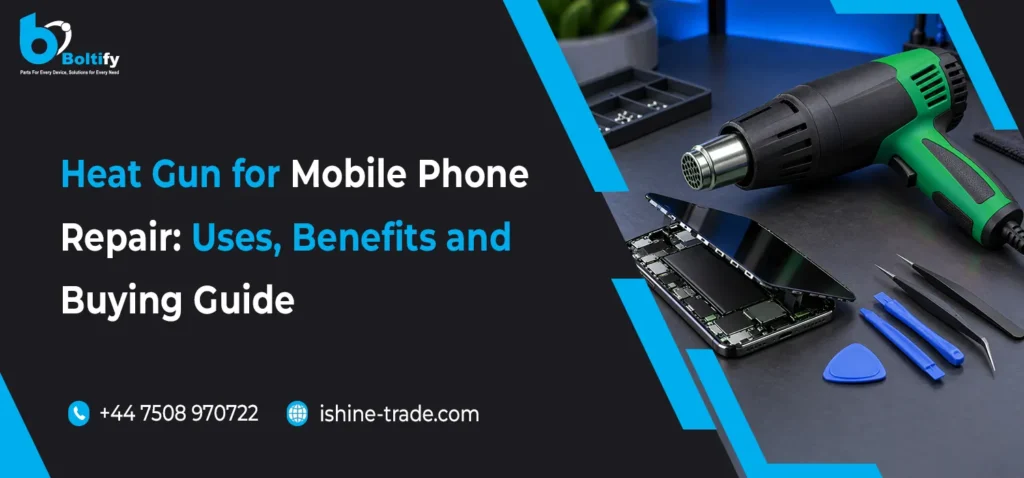
Removing a tightly sealed phone screen or back cover requires patience and the right equipment. Too much force can crack the glass, damage the frame or tear a cable. A heat gun helps soften the adhesive holding these parts together, making separation easier when used correctly.
For technicians and repair shop owners, understanding how to choose and use heating equipment is an essential part of setting up a repair bench. Businesses sourcing mobile phone accessories wholesale can also explore repair equipment alongside the replacement parts needed for everyday jobs.
This guide explains the uses and benefits of a heat gun, the features to check before buying one and the difference between handheld heating tools and hot air rework stations.
What Is a Heat Gun?
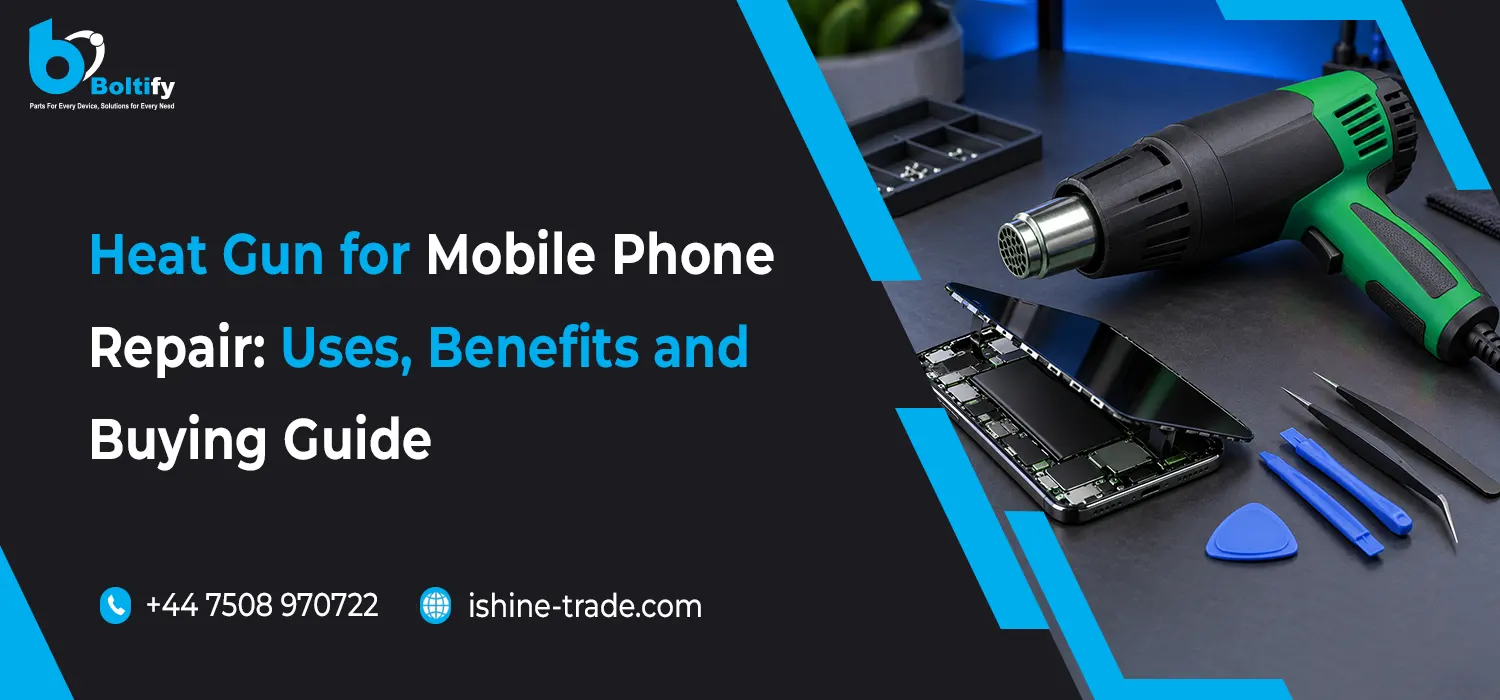
A heat gun is an electric tool that produces a directed stream of hot air. It is commonly used to soften adhesives, shrink heat-shrink tubing and heat suitable materials.
In mobile phone repair, controlled heating can help loosen the adhesive around a display or back cover. This allows technicians to work with opening picks and other suitable tools without relying entirely on force.
However, heating does not guarantee damage-free removal. The phone’s design, glass condition, cable positions and repair technique all affect the result.
What Is a Heat Gun Used for in Mobile Phone Repair?
Softening Screen Adhesive
Many smartphones have displays bonded to the frame with adhesive. Heating the bonded area according to the device’s repair procedure can make that adhesive easier to separate.
Once the adhesive softens, technicians use appropriate opening tools to work around the edges. Care is still needed because inserting a tool too deeply can damage cables or internal components.
Loosening Back Cover Adhesive
A heat gun may also help prepare an adhesive-mounted back cover for removal. This can be useful when a technician needs access to internal parts or is replacing damaged back glass.
The process varies between models. Some devices require a particular heating method, and not every back cover can be removed using the same approach.
Shrinking Heat-Shrink Tubing
Heat-shrink tubing is used to insulate suitable wire connections. Applying controlled heat causes the tubing to tighten around the joint.
This is a separate task from opening a phone, but it can be useful for technicians handling other electronics repairs. Nearby materials must also be able to tolerate the heat.
Supporting Specialist Electronics Work
Circuit-board repairs require more precise heating equipment. A purpose-built hot air rework station allows technicians to control temperature, airflow and nozzle size for appropriate soldering and desoldering tasks.
A general-purpose handheld heat gun should not be treated as a replacement for a precision rework station.
What Are the Benefits of Using a Heat Gun?
Less Force During Adhesive Removal
Softened adhesive generally requires less pulling and prying than an unheated bond. This can make separation more manageable, although careful handling remains essential.
More Control Over Heating
A suitable tool with adjustable settings gives technicians more control over how heat is applied. This matters when working with devices containing heat-sensitive parts.
The available controls vary between models, so check the specifications before buying.
Support for Different Workshop Tasks
Depending on its design, a heat gun can support adhesive softening, heat-shrink work and other suitable heating tasks. This makes it a useful addition to a workshop that handles more than one type of repair.
Easier Preparation for Opening
Heating can help prepare bonded edges before opening tools are introduced. Used as part of the correct repair procedure, it can reduce the temptation to force a screen or cover that is still firmly attached.
Heat Gun vs Hot Air Rework Station: What Is the Difference?
Both tools deliver heated air, but their intended applications and level of control differ.
| Feature |
Handheld Heat Gun |
Hot Air Rework Station |
| Common use |
General heating and adhesive softening |
Precision electronics rework |
| Temperature control |
Varies by model |
Typically adjustable |
| Airflow control |
May offer limited settings |
Typically adjustable |
| Heating area |
Often broader |
Nozzles can direct air towards smaller areas |
| Main buying consideration |
Suitability for the surface and task |
Control for the intended board repair |
If your workshop mainly handles screen and back cover replacements, choose heating equipment suited to those opening procedures. For circuit-board work, assess dedicated rework equipment separately.
How to Choose a Heat Gun for Mobile Phone Repair
When comparing Wholesale Repairing Tools, focus on the work your business performs rather than choosing equipment solely by price or maximum power.
Check Temperature Adjustment
Adjustable temperature settings provide flexibility for different tasks. A high maximum temperature alone does not make a tool suitable for phone repair.
Check how the temperature is controlled and whether the equipment is appropriate for the repair procedures you follow.
Look at Airflow Settings
Airflow affects how heated air reaches the work area. Adjustable airflow is especially valuable for detailed electronics work, where strong airflow can disturb small components.
For a handheld heat gun, check whether it offers separate airflow and temperature adjustment or only fixed operating modes.
Review Nozzles and Accessories
The nozzle influences the area exposed to heated air. Check which attachments are included, how they fit and whether replacement accessories are available.
Avoid assuming that every nozzle or attachment works with every model.
Consider Comfort and Workbench Space
Grip, weight and cable placement matter during repeated use. A comfortable tool is easier to handle, while a suitable stand or resting position helps keep the hot nozzle away from the work surface.
A rework station also needs enough bench space for its base unit, holder and cables.
Confirm Electrical Compatibility
Check the exact model’s voltage, plug type and power requirements. Product versions can differ, so confirm compatibility with your workshop’s supply before ordering.
Read the Product Details Carefully
Review the intended applications, controls, included accessories and operating instructions. If an essential specification is missing, ask the supplier before buying.
The right choice is a tool that suits your repair process and provides the control you need.
What Temperature Should You Use for Phone Repair?
There is no single heat gun temperature suitable for every smartphone or repair.
The appropriate heating method depends on the device, adhesive, component location and equipment being used. The temperature displayed on a tool also does not necessarily represent the temperature reached by the phone’s surface.
Follow the device manufacturer’s repair guidance where available. Avoid copying a setting from another phone model or increasing the heat simply because a part is difficult to remove.
What Mistakes Should You Avoid?
A heat gun requires careful handling. Common mistakes include:
- Keeping hot air directed at one spot for too long.
- Using excessive heat to speed up adhesive removal.
- Pulling on glass while the adhesive is still firmly bonded.
- Inserting opening tools too deeply.
- Using a general-purpose heat gun for precision board work.
- Heating a swollen or damaged battery.
- Working near flammable liquids or solvent vapours.
Use a suitable heat-resistant work surface and follow the equipment’s instructions. Allow cleaning solvents to evaporate fully before applying heat, and let the nozzle cool before storing the tool.
What Other Tools Do You Need Alongside a Heat Gun?
Heating equipment is only one part of a mobile repair setup. Depending on the device and job, technicians may also need:
- Precision screwdrivers.
- Plastic opening picks and pry tools.
- A suitable suction tool.
- Fine tweezers.
- Appropriate replacement adhesive.
- Suitable protection against electrostatic discharge.
Each tool has a specific purpose. A heat gun softens adhesive, while opening tools help separate parts and replacement adhesive supports reassembly.
For a broader look at workbench equipment, read Essential Mobile Phone Repair Tools Every Technician Must Have.
Frequently Asked Questions
Can a Heat Gun Help Remove a Phone Screen?
Yes, suitable controlled heating can soften the adhesive around a phone screen. The correct method depends on the device, and careful use of opening tools is still necessary.
Can a Heat Gun Damage a Phone?
Yes. Excessive heat can damage displays, batteries, plastic parts and other components. Concentrating hot air on one area for too long can also cause damage.
Can You Use a Hair Dryer Instead?
A hair dryer may soften some adhesives, but its heating performance and controls differ from dedicated repair equipment. Follow the device’s repair procedure rather than assuming the tools are interchangeable.
Can a Heat Gun Be Used for Circuit-Board Repairs?
A general-purpose heat gun is usually unsuitable for precise circuit-board rework. A dedicated hot air rework station offers controls and nozzle options designed for that type of task.
Is a Heating Pad Better Than a Heat Gun?
The suitable choice depends on the repair. A heating pad transfers heat through contact, while a heat gun directs heated air towards an area. Use the method appropriate for the device and procedure.
Choose Heating Equipment That Matches Your Repairs
A heat gun can help technicians soften adhesive and prepare bonded phone parts for removal. Its usefulness depends on choosing suitable equipment and controlling how heat reaches the device.
Before buying, compare temperature adjustment, airflow, accessories and electrical compatibility. For detailed circuit-board work, consider a dedicated hot air rework station.
Explore repair equipment at iShine Trade and check individual product specifications to find tools suited to your workshop.