Choosing the right replacement part is one of the most important decisions when repairing an iPhone. Whether you’re a repair technician, a wholesale buyer, or someone fixing a personal device, selecting the wrong component can lead to compatibility issues, poor performance, and unnecessary repair costs.
Many buyers assume that every replacement part offers the same level of quality. In reality, iPhone replacement parts are available in different grades, with OEM vs aftermarket iphone parts being the two most common options. Understanding the differences between them helps you make smarter purchasing decisions and deliver better repair results.
This guide explains how OEM vs aftermarket iPhone parts compare in terms of quality, compatibility, durability, warranty, and overall value. You’ll also learn when each option is the better choice and how to avoid common mistakes when purchasing replacement components.
What Are OEM iPhone Parts?
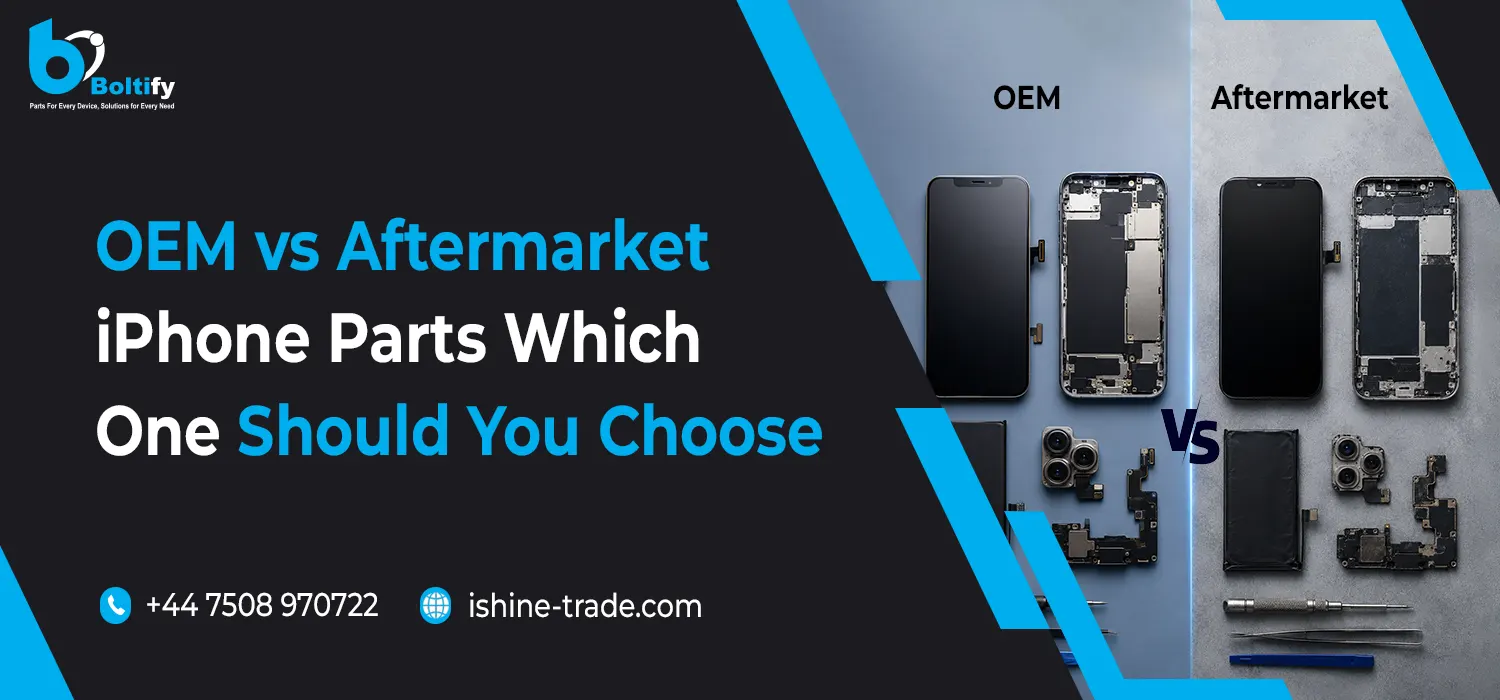
OEM stands for Original Equipment Manufacturer. These are components manufactured to match Apple’s original specifications and are designed to provide the closest possible performance to the parts originally installed in the device.
OEM-quality parts are widely preferred by professional repair shops because they typically offer:
- Excellent compatibility
- Reliable performance
- Better fit and finish
- Longer lifespan
- Consistent repair results
Common OEM replacement components include:
- Display assemblies
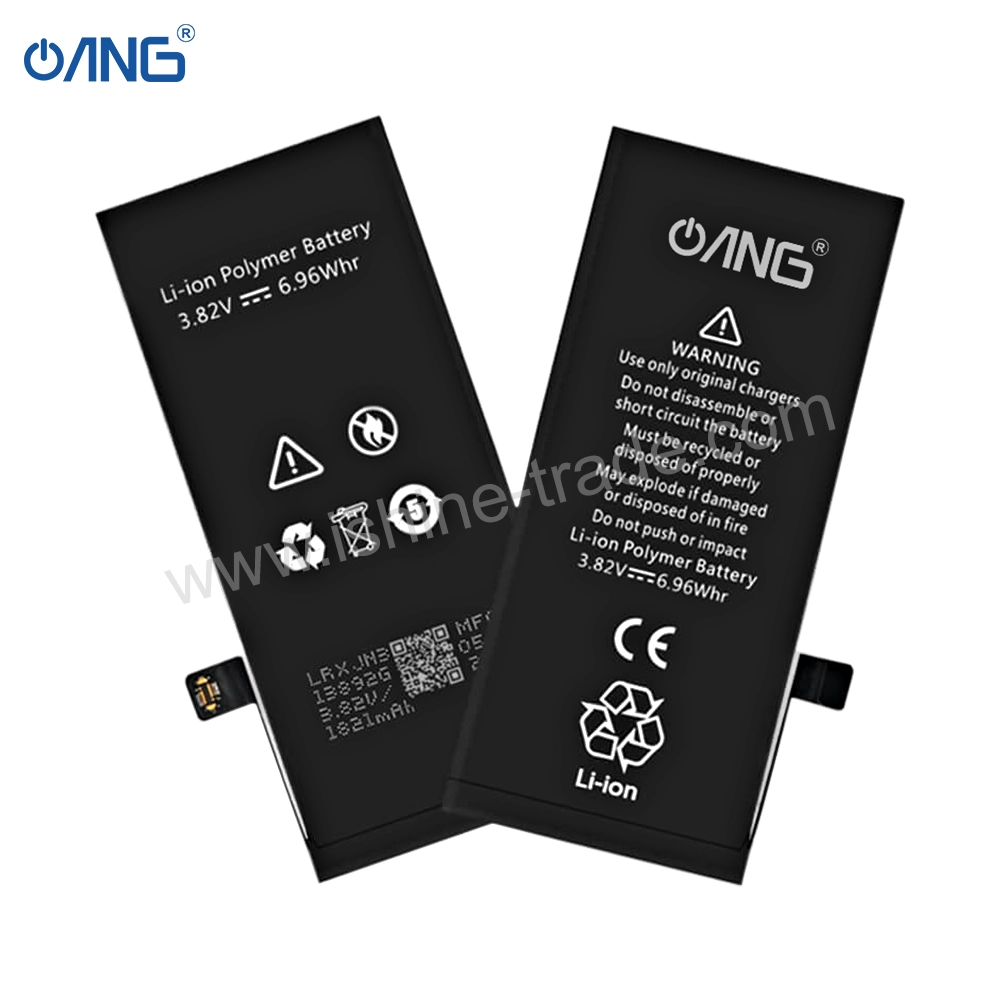
- Batteries
- Charging ports
- Camera modules
- Speaker assemblies
- Flex cables
Although OEM parts usually cost more than aftermarket alternatives, they often reduce the chances of repeat repairs and customer complaints.
What Are Aftermarket iPhone Parts?
Aftermarket parts are manufactured by third-party companies rather than the original equipment manufacturer. Their quality can vary significantly depending on the supplier and manufacturing standards.
High-quality aftermarket parts can perform well for many repairs, while lower-quality options may experience issues such as:
- Reduced display brightness
- Lower touch sensitivity
- Shorter battery life
- Poor colour accuracy
- Faster wear and tear
- Inconsistent compatibility
For this reason, choosing a trusted supplier is just as important as choosing the part itself.
Many repair businesses successfully use premium aftermarket parts because they provide a balance between cost and performance.
OEM vs Aftermarket iPhone Parts: Key Differences
| Feature |
OEM Parts |
Aftermarket Parts |
| Quality |
Excellent |
Varies by manufacturer |
| Compatibility |
Excellent |
Good to Excellent |
| Performance |
Original-like |
Depends on quality |
| Price |
Higher |
More affordable |
| Durability |
Longer lifespan |
Varies |
| Availability |
Limited |
Widely available |
| Best For |
Premium repairs |
Budget-conscious repairs |
While OEM parts generally offer the best overall experience, premium aftermarket parts can still provide reliable performance when sourced from reputable suppliers.
Quality Comparison
One of the biggest differences between OEM vs aftermarket iphone parts is manufacturing quality.
OEM components are built according to strict production standards, ensuring consistent quality across different batches.
Aftermarket parts, however, are produced by multiple manufacturers. Some factories produce excellent replacement parts, while others focus primarily on reducing production costs.
This means two aftermarket screens may look similar but perform very differently after installation.
Professional repair businesses usually test replacement components before installation to ensure consistent repair quality.
Compatibility Matters More Than Price
Many buyers focus only on price when purchasing replacement parts.
However, compatibility is often more important than saving a few pounds.
Even small differences in connectors, flex cables, display technology, or component specifications can affect device performance.
Before placing an order, always verify:
- iPhone model number
- Display type
- Connector compatibility
- Part version
- Supplier specifications
If you’re unsure how compatibility affects repairs, read our Complete Guide to iPhone Replacement Parts for a detailed explanation of iPhone components, repair considerations, and buying advice.
OEM Doesn’t Always Mean Better for Every Repair
Many people assume OEM parts are always the only correct choice.
In reality, the best option depends on several factors:
- Customer budget
- Device value
- Repair purpose
- Expected lifespan
- Business profitability
For example, repairing an older iPhone with a premium aftermarket screen may provide excellent value without significantly affecting the user experience.
Similarly, repair shops performing high-volume repairs often combine OEM and premium aftermarket components depending on customer requirements.
When OEM Parts Are the Better Choice
OEM parts are often the preferred option when quality and long-term reliability matter more than cost. They are especially suitable for newer iPhone models, premium repairs, and customers who expect performance close to the original device.
OEM parts are recommended if you:
- Repair flagship iPhone models.
- Want maximum compatibility.
- Need consistent repair quality.
- Operate a professional repair business.
- Want to reduce repeat repairs and warranty claims.
Although OEM components are more expensive, they often provide better value over time because they help minimise future repair issues.
When Aftermarket Parts Make More Sense
Aftermarket parts are not automatically low quality. Many premium aftermarket manufacturers produce reliable components that perform well for everyday repairs.
They are often a practical choice when:
- Repairing older iPhone models.
- Working with customers on a limited budget.
- Performing high-volume repairs.
- Buying replacement parts in bulk.
- OEM parts are unavailable.
The key is choosing reputable suppliers instead of selecting parts based only on the lowest price.
What About Refurbished iPhone Parts?
Refurbished iPhone parts are genuine Apple components that have been removed from previously used devices, professionally tested, and restored for reuse.
Unlike aftermarket parts, refurbished components were originally manufactured for Apple devices, making them an attractive option for many repair businesses.
Common refurbished parts include:
- OLED display assemblies
- Rear cameras
- Face ID components
- Speakers
- Charging ports
When sourced from trusted suppliers, refurbished parts can offer an excellent balance between performance and affordability.
Common Mistakes When Buying iPhone Replacement Parts
Many repair problems begin before the installation process because buyers purchase parts without verifying quality or compatibility.
Avoid these common mistakes:
- Buying solely based on the cheapest price.
- Ignoring iPhone model compatibility.
- Purchasing from unknown suppliers.
- Assuming every aftermarket part offers the same quality.
- Failing to inspect replacement parts before installation.
- Ignoring warranty or return policies.
Making informed purchasing decisions reduces repair failures and improves customer satisfaction.
How to Identify High-Quality iPhone Replacement Parts
Whether you’re buying OEM or aftermarket components, always evaluate the quality before placing an order.
Look for suppliers that provide:
- Detailed product specifications.
- Accurate compatibility information.
- Quality control testing.
- Warranty coverage.
- Consistent customer reviews.
- Reliable after-sales support.
Professional repair businesses also test displays, batteries, cameras, and charging ports before installation to ensure every component functions correctly.
Choosing the Right Supplier Matters
Even genuine-quality parts can create problems if they come from an unreliable supplier.
A trusted supplier should offer:
- Consistent stock availability
- Transparent product grading
- Fast shipping
- Reliable warranties
- Responsive customer support
Working with experienced suppliers helps repair businesses maintain quality while reducing costly returns and customer complaints.
Buying Wholesale iPhone Screens
If you regularly repair iPhones or manage a repair business, buying replacement displays in bulk can reduce costs and improve stock availability.
When purchasing Wholesale iPhone Screens, always compare:
- Display technology (LCD, OLED, Soft OLED, Hard OLED)
- Compatibility by iPhone model
- Product grading
- Warranty terms
- Supplier reputation
- Quality testing procedures
Choosing quality wholesale screens helps deliver reliable repairs while improving long-term customer satisfaction.
Learn More About iPhone Replacement Parts
Choosing between OEM vs aftermarket iphone parts is only one aspect of successful iPhone repairs. To better understand screens, batteries, charging ports, cameras, accessories, and compatibility, explore our Complete Guide to iPhone Replacement Parts.
Frequently Asked Questions
Are OEM iPhone parts always better than aftermarket parts?
OEM parts generally offer excellent compatibility and performance. However, high-quality aftermarket parts can also deliver reliable results when purchased from reputable suppliers.
Can aftermarket iPhone parts damage my phone?
Quality aftermarket parts normally do not damage a device. Problems usually occur when low-grade components or incompatible parts are installed.
Are refurbished iPhone parts original?
Yes. Refurbished parts are genuine components removed from previously used devices, professionally tested, and prepared for reuse.
Which option is best for repair shops?
Many repair businesses use a combination of OEM and premium aftermarket parts depending on customer requirements, repair budgets, and device value.
How can I avoid buying low-quality iPhone parts?
Purchase from trusted suppliers, verify compatibility, check warranty coverage, and avoid choosing parts based only on price.
Final Thoughts
Choosing between OEM and aftermarket iPhone parts depends on your repair goals, budget, and quality expectations. OEM components offer the closest experience to the original device, while premium aftermarket parts can provide excellent value when sourced from reliable suppliers. Refurbished parts also remain a practical option for many repairs, combining genuine quality with cost savings.
Rather than focusing only on price, consider compatibility, durability, supplier reputation, and long-term performance before making a purchase. A well-informed decision helps reduce repair issues, improves customer satisfaction, and ensures more reliable repair outcomes over time.