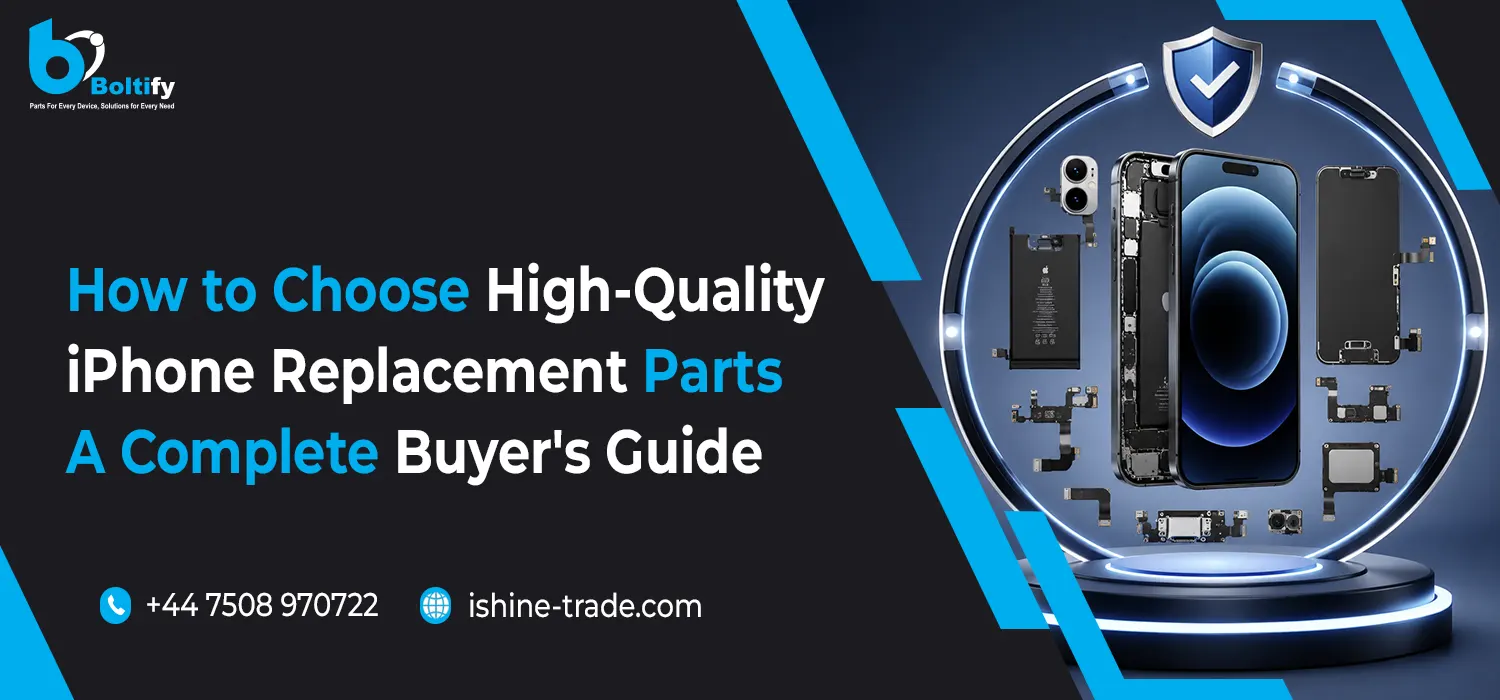
Whether you’re repairing your own iPhone, managing a repair shop, or purchasing stock for a wholesale business, choosing high-quality iPhone replacement parts is one of the most important decisions you’ll make. A low-quality replacement part may seem like a cheaper option initially, but it can lead to poor performance, unhappy customers, repeat repairs, and unnecessary costs.
The market is full of different grades of replacement parts, including OEM, refurbished, pulled, and aftermarket components. While many parts may look identical, their quality, durability, compatibility, and long-term reliability can vary significantly. Understanding these differences helps you make smarter purchasing decisions and reduces the risk of installation problems.
If you’re new to buying repair components, it’s also worth reading our Complete Guide to iPhone Replacement Parts to understand the different parts commonly replaced during iPhone repairs.
In this guide, you’ll learn how to identify high-quality replacement parts, what to look for before purchasing, common mistakes to avoid, and how to choose a reliable supplier for your repair business.
Table of Contents
- Why Part Quality Matters
- Different Types of iPhone Replacement Parts
- How to Identify High-Quality iPhone Parts
- OEM vs Aftermarket iPhone Parts
- Choosing Quality iPhone Screens
- Battery Quality and Safety
- Charging Ports and Small Components
- How to Choose a Reliable Supplier
- Common Buying Mistakes
- Frequently Asked Questions
Why Choosing High-Quality iPhone Replacement Parts Matters
Every successful repair starts with quality components. Even the most experienced technician cannot achieve excellent repair results if the replacement part itself is poorly manufactured.
High-quality replacement parts provide several important benefits:
- Better compatibility with the original device
- Longer product lifespan
- Improved customer satisfaction
- Fewer warranty claims
- More reliable performance
- Reduced installation issues
For repair shops, using reliable parts also improves customer trust and encourages repeat business. Businesses that consistently install quality components often spend less time handling returns and defective products.
Understanding the Different Types of iPhone Replacement Parts
One of the biggest mistakes buyers make is assuming that every replacement part offers the same quality. In reality, replacement parts are available in several different grades.
OEM Parts
OEM (Original Equipment Manufacturer) parts are manufactured to match Apple’s original specifications. They typically offer the highest level of compatibility, colour accuracy, touch response, and reliability.
Although OEM parts are usually more expensive, they are often the preferred choice for professional repair businesses that prioritise quality.
Refurbished Parts
Refurbished parts are genuine original components that have been professionally repaired or restored for reuse.
For example:
- Original LCD refurbished with new glass
- Original battery housing reused
- Genuine camera modules tested and restored
When purchased from trusted suppliers, refurbished parts can provide excellent value while maintaining high performance.
Aftermarket Parts
Aftermarket parts are produced by third-party manufacturers rather than the original manufacturer.
Their quality can vary significantly.
Some premium aftermarket components perform almost as well as OEM parts, while low-quality versions may suffer from:
- Poor display brightness
- Weak touch sensitivity
- Short battery life
- Inaccurate colours
- Reduced durability
This is why selecting a trusted supplier is far more important than choosing the cheapest product available.
OEM vs Aftermarket iPhone Parts: Which Is Better?
There is no universal answer because the right choice depends on your budget, repair requirements, and customer expectations.
| Feature |
OEM Parts |
Premium Aftermarket Parts |
| Quality |
Original manufacturer standard |
Varies by manufacturer and quality grade |
| Compatibility |
Excellent fit and performance |
Good if sourced from a reliable supplier |
| Display Quality |
Original colour accuracy and brightness |
May vary depending on quality |
| Touch Response |
Smooth and responsive |
Good on premium-grade parts |
| Durability |
Long-lasting |
Depends on materials and manufacturing |
| Warranty |
Often backed by supplier warranty |
Varies between suppliers |
| Price |
Higher |
More affordable |
| Best For |
Premium repairs and professional repair shops |
Budget-conscious repairs and wholesale businesses |
For businesses performing premium repairs, OEM or high-grade refurbished parts usually provide better long-term value.
Budget repairs may use premium aftermarket parts, provided they come from a reputable supplier with proper quality control.
How to Identify High-Quality iPhone Replacement Parts
Before purchasing any replacement component, consider several quality indicators.
Check Device Compatibility
Compatibility should always be your first priority.
Many iPhone models look almost identical but use completely different internal connectors and components.
Before ordering replacement screens, always verify the exact iPhone model to avoid costly mistakes. If you’re unsure how compatibility works, read our guide on How to Check iPhone Screen Compatibility Before Wholesale Ordering.
Likewise, identifying the correct device model before buying any component is equally important. Our article on How to Find Out What iPhone You Have Before Buying Parts explains the easiest ways to confirm your model before placing an order.
Inspect Build Quality
Premium replacement parts usually have:
- Precise connector alignment
- Clean solder points
- Strong flex cables
- Smooth finishing
- Consistent materials
- Proper adhesive placement
Cheap parts often show manufacturing defects immediately after opening the packaging.
Buy From Trusted Wholesale Suppliers
Choosing the right supplier is just as important as choosing the part itself.
A reliable supplier should provide:
- Quality testing
- Warranty support
- Accurate product descriptions
- Model compatibility information
- Consistent inventory
- Professional customer service
For repair shops and bulk buyers, sourcing Wholesale iPhone Screens from a trusted supplier can help ensure consistent quality, better pricing, and reliable stock availability for different iPhone models.
Understand Screen Quality Grades
Display quality varies more than almost any other replacement part.
When buying screens, pay attention to:
- Brightness
- Colour accuracy
- Touch responsiveness
- Display resolution
- Oleophobic coating
- Glass strength
- Frame quality
If you’re comparing different display technologies, our guide on How to Choose the Best iPhone Screen: LCD vs OLED Explained explains which option is best for different repair requirements.
Battery Quality Should Never Be Ignored
The battery is one of the most frequently replaced iPhone components, but it is also one of the most sensitive. Choosing a low-quality battery can lead to reduced battery life, unexpected shutdowns, overheating, or even safety risks.
When purchasing replacement batteries, look for products that offer:
- Stable battery capacity
- High-quality battery cells
- Reliable protection circuits
- Consistent charging performance
- Long cycle life
- Proper quality testing
Professional repair businesses should avoid buying batteries solely based on price. Instead, focus on suppliers that provide tested products with clear specifications and warranty support.
If you’re comparing battery costs or planning a repair, our iPhone Battery Replacement Cost: Latest Prices, Factors & Savings Tips guide explains the key factors that affect replacement costs. For model-specific information, you can also read our iPhone 12 Pro Battery Guide: Capacity, Battery Life, Replacement & Buying Tips.
Choosing Quality Charging Ports and Small Components
Charging ports, flex cables, microphones, speakers, vibration motors, and button flexes are smaller components, but they play a critical role in the overall performance of an iPhone.
Low-quality charging ports can cause:
- Slow charging
- Intermittent charging
- Poor data transfer
- Accessory detection issues
- Connection failures
Before purchasing these components, confirm:
- Exact iPhone model compatibility
- Connector quality
- Flex cable condition
- Manufacturing precision
- Supplier warranty
If you’re repairing charging issues, our guide on How to Replace iPhone 15 Charging Port: Step-by-Step Guide provides additional information about the replacement process, while Common iPhone 14 Charging Port Issues and How to Fix Them explains the most common faults technicians encounter.
Camera Modules Require Exact Compatibility
Modern iPhone camera systems are more advanced than ever. Features such as Night Mode, Portrait Mode, Optical Image Stabilisation (OIS), and high-resolution sensors rely on precise hardware compatibility.
When replacing a camera module, always ensure that:
- The part matches the exact iPhone model.
- Front and rear camera specifications are correct.
- Connectors are free from damage.
- The supplier has tested the module before shipping.
Water exposure can also affect camera performance and other internal components. If an iPhone has suffered liquid damage, it’s worth reading our guide on Fix A Water Damaged iPhone: Proven Methods to Restore Your Device before replacing parts unnecessarily.
Common Mistakes Buyers Should Avoid
Buying iPhone replacement parts without proper research often leads to unnecessary expenses and repeat repairs.
Some of the most common mistakes include:
Buying Based on Price Alone
The cheapest option is not always the best value. Low-quality parts may fail sooner, increasing warranty claims and customer dissatisfaction.
Ignoring Compatibility
Even devices with similar names can use different connectors, displays, batteries, or camera modules. Always verify the exact model before ordering.
Choosing Unknown Suppliers
A trusted supplier should provide clear product descriptions, quality control, warranty support, and reliable customer service.
Ignoring Screen Quality Grades
Not every replacement screen offers the same performance. If you’re comparing display options, read our guide on Best Affordable iPhone Replacement Screens: How to Choose Quality Without Breaking Your Budget to understand what to look for before making a purchase.
A Simple Checklist Before Buying iPhone Replacement Parts
Before placing your next order, ask yourself the following questions:
- ✔ Have I confirmed the exact iPhone model?
- ✔ Is the replacement part compatible with the device?
- ✔ Does the supplier provide warranty support?
- ✔ Has the product been quality tested?
- ✔ Am I buying from a trusted wholesale supplier?
- ✔ Does the part match the quality required for the repair?
- ✔ Have I compared OEM, refurbished, and aftermarket options?
Following this checklist can reduce costly mistakes and improve repair success rates.
Frequently Asked Questions
How can I tell if an iPhone replacement part is high quality?
Look for reliable suppliers, accurate compatibility information, quality testing, warranty support, and consistent product specifications. Avoid purchasing solely based on the lowest price.
Are OEM parts always better than aftermarket parts?
OEM parts generally provide the best compatibility and performance. However, premium aftermarket parts from reputable manufacturers can also deliver excellent results for many repairs.
Why is compatibility so important?
Different iPhone models often use different connectors, sensors, and internal layouts. Installing an incompatible part can lead to poor performance or complete failure.
Where should repair shops buy iPhone replacement parts?
Repair businesses should purchase from trusted wholesale suppliers that provide tested products, warranty support, and accurate compatibility information.
Should I buy OEM, refurbished, or aftermarket parts?
The best option depends on your budget and repair requirements. OEM parts offer the highest quality, refurbished parts provide excellent value, and premium aftermarket parts can be a cost-effective choice when sourced from reliable suppliers.
Conclusion
Choosing high-quality iPhone replacement parts is about more than finding the lowest price. The right components improve repair quality, reduce return rates, increase customer satisfaction, and protect your business reputation.
Whether you’re replacing a screen, battery, charging port, or camera module, always verify compatibility, inspect product quality, and work with a trusted supplier. Taking the time to choose reliable parts can save money and prevent unnecessary repairs in the long run.
If you’re looking for a broader overview of iPhone repair components, don’t forget to explore our Complete Guide to iPhone Replacement Parts, where you’ll find detailed information on screens, batteries, charging ports, cameras, accessories, and more.